As the global demand for high-quality Chinese used cars continues to surge, a critical divide has emerged in the marketplace: the gap between fair market value and suspiciously low pricing. For international importers and dealerships, the temptation of a “bargain” often hides a catastrophic risk—Flood-Damaged Vehicles (Water-Logged Cars).
对于寻求廉价进口车的海外买家来说,被水淹过的二手车是最大的风险之一。
Flood-damaged used cars often look cheaper at first, but the hidden repair risks can be very expensive for overseas buyers.
Before choosing cheap imports, buyers should learn how to identify flood-damaged used cars and verify the real condition carefully.
在AutoZQI,我们坚信专业采购始于风险规避。本文将深入剖析为何水淹车是您海外汽车业务中最危险的投资。
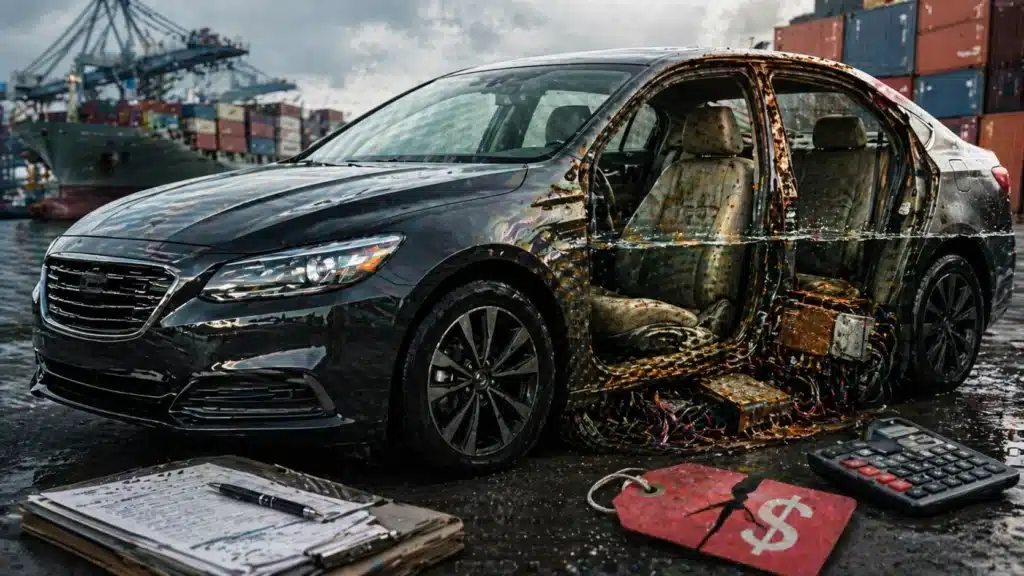
1. The “Invisible” Decay of Electrical Architectures
Modern Chinese vehicles, especially New Energy Vehicles (NEVs) and high-spec internal combustion engine (ICE) models, are essentially “computers on wheels.” When a vehicle is submerged, water penetrates the Electronic Control Units (ECUs), sensors, and the complex wiring harness.
- The Corrosion Timer: Even if a car starts and runs today, residual moisture and minerals trigger electrolysis. This leads to “creeping corrosion” that may take 3-6 months to manifest as a total system failure.
- Intermittent Faults: Flood cars often suffer from “ghost” malfunctions—airbags that may not deploy, or sudden engine stalls—which are impossible to replicate during a standard inspection.
2. The “Dry and Disguise” Trap: Unethical Refurbishment
Unscrupulous suppliers often use “surface-level” restoration techniques to flip flood-damaged units quickly.
- Substandard Parts: Instead of replacing damaged modules with OEM (Original Equipment Manufacturer) components, they use low-quality, third-party salvaged parts to keep costs down.
- Temporary Fixes: Some sellers simply bake the interior or use industrial deodorizers to hide the “musty” smell, leaving the compromised core components untouched.
3. The Technical Blind Spot: Lack of OEM Schematics
For a buyer in Lagos, Tashkent, or Dubai, the biggest challenge is diagnostic capability.
- Proprietary Diagrams: Many Chinese domestic models have specific electrical architectures. Overseas workshops rarely have access to the official circuit diagrams or specialized diagnostic software required to trace a short circuit in a flooded harness.
- The Repair Dead-End: Without the “map” (schematics), your local mechanics are forced to guess. This leads to hundreds of billable hours with no resolution, turning your inventory into “dead stock.”
4. The Logistics & Parts Nightmare
Even if you identify the faulty component, the supply chain for specific Chinese-market modules can be complex.
- Part Availability: Flood damage usually requires replacing unique components—like the Body Control Module (BCM) or specialized sensors—that are not common wear-and-tear items.
- Shipping Costs: Importing individual electronic components via air freight to resolve a “cheap car” issue quickly erodes any initial profit margin you hoped to gain.
5. Protecting Your Reputation and ROI
In the B2B world, your reputation is your most valuable asset. Selling a flood-damaged car to a retail customer doesn’t just lose you one sale; it destroys your brand’s trust in the local market.
How to Identify Flood-Damaged Used Cars
Before buying any used car for export, overseas buyers should check the vehicle history, request detailed photos and videos, inspect the chassis and interior carefully, and work with a supplier who can provide transparent vehicle information and export support.
- 价格差异:如果 FOB 价格比同年份同里程的市场平均价格低 20-30%,则务必格外谨慎。
- 详细的检查报告:要求提供座椅导轨、仪表板下方线路和备胎槽的高分辨率照片——这些区域的淤泥和氧化物最难清理。
Why Choose AutoZQI?
At autozqi.com, we implement a rigorous multi-point inspection process to ensure that no flood-damaged or salvaged vehicles ever enter our export pipeline. We prioritize long-term partnership over short-term profit, providing our clients with full transparency and technical support.
Don’t let a “cheap” price tag become an expensive lesson.