China Auto Export News: August 2026 Policy & Market Update
China’s automotive export sector recorded three significant developments in August 2026: the European Union finalized additional tariffs on Chinese electric vehicles, Vietnam emerged as the fastest-growing destination with 47% year-on-year growth (Vietnam Customs, 2026), and Brazil introduced simplified homologation procedures for right-hand-drive conversions. These changes directly affect pricing structures, market entry timelines, and compliance requirements for importers working with suppliers like AutoZQI.
TL;DR
The EU locked in tariffs up to 38.1% on Chinese EVs effective August 15, 2026, while Vietnam’s import surge and Brazil’s regulatory easing create new opportunities. Importers must recalculate landed costs for European markets and evaluate Southeast Asian expansion. The shifts signal a geographic rebalancing of China’s export strategy toward tariff-neutral markets.
What Happened
The European Commission published its final anti-subsidy regulation on August 15, 2026, imposing manufacturer-specific duties ranging from 17.4% to 38.1% on top of the standard 10% import tariff (European Commission, 2026). BYD received the lowest additional rate at 17.4%, while non-cooperating manufacturers face the maximum 38.1%. The regulation applies to battery electric vehicles classified under HS code 8703.80.
Vietnam’s General Department of Customs reported 84,200 passenger vehicle imports from China in the first seven months of 2026, up 47% compared to the same period in 2025. The growth concentrates in the $15,000-$25,000 sedan segment, with brands like Chery, Geely, and BYD capturing market share from established Japanese competitors. Import duties remain at 70% for CBU units, but the ASEAN Trade in Goods Agreement (ATIGA) provides preferential rates for vehicles with qualifying regional content.
Brazil’s National Traffic Council (CONTRAN) amended Resolution 292 on August 20, 2026, allowing certified conversion centers to handle right-hand-drive to left-hand-drive modifications without full re-homologation. The change reduces conversion timelines from 90 days to approximately 30 days (CONTRAN, 2026) and cuts compliance costs by an estimated $2,800 per vehicle. The policy directly benefits importers sourcing from markets like Japan and Thailand through Chinese trading companies.
Why It Matters
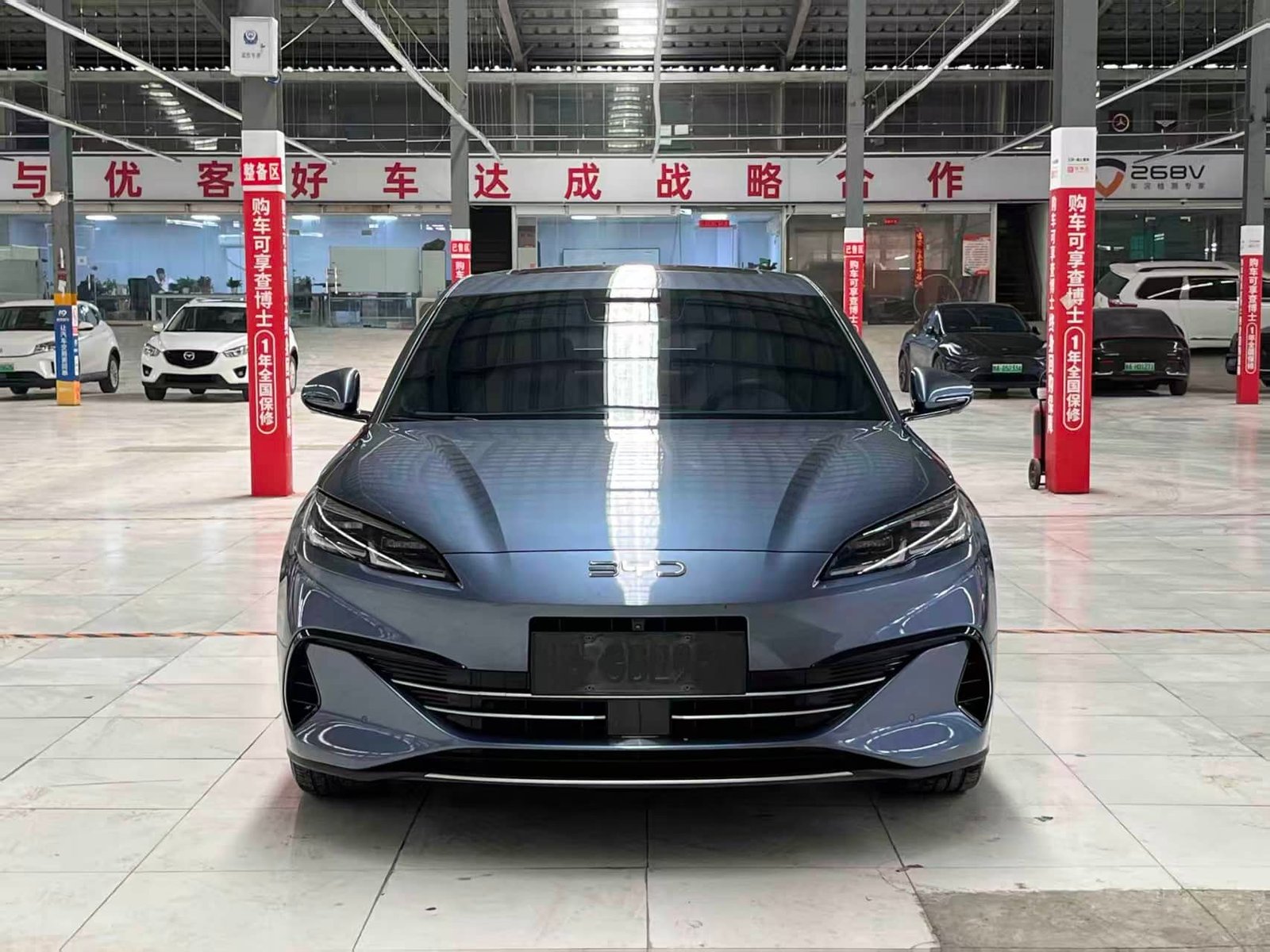
The EU tariff structure creates a two-tier pricing system in European markets. A BYD Seal imported FOB Shanghai at $28,000 now carries an additional $4,872 in duties (17.4% on the CIF value), while equivalent models from non-cooperating brands face $10,668 in extra costs. This 2.2x difference reshapes competitive positioning and forces importers to evaluate manufacturer partnerships carefully.
| Manufacturer | Additional Tariff | Cost Impact on $30,000 CIF |
|---|---|---|
| BYD | 17.4% | +$5,220 |
| Geely | 19.3% | +$5,790 |
| SAIC | 36.3% | +$10,890 |
| Non-cooperating | 38.1% | +$11,430 |
Vietnam’s import acceleration reflects broader Southeast Asian demand patterns. The country’s automotive market grew by 23% in 2025 according to the Vietnam Automobile Manufacturers’ Association, driven by rising middle-class incomes and infrastructure investment. Chinese brands offer price points 18-25% below comparable Japanese models, with payment terms typically structured as 30% deposit, 70% against copy of Bill of Lading.
Brazil’s conversion policy opens arbitrage opportunities for importers with access to right-hand-drive inventory from Japan, Australia, or UK markets. Chinese export trading companies increasingly aggregate these vehicles in bonded warehouses in Guangzhou and Tianjin, offering consolidated shipments with conversion arranged at Brazilian ports. This triangular trade model reduces total landed costs by 8-12% compared to direct imports from origin countries.
What’s Likely Next
The EU tariff regime will likely trigger three responses from Chinese manufacturers. First, expect accelerated localization in Hungary, where BYD and CATL are building production capacity scheduled for 2027-2028 startup. Second, manufacturers may shift export focus to markets without punitive tariffs—Mexico, Thailand, and Saudi Arabia show strong import growth patterns. Third, pricing adjustments will compress margins; some brands may exit lower-margin European segments.
Vietnam’s growth trajectory faces potential headwinds from domestic production plans. VinFast and Hyundai Thanh Cong are expanding local assembly capacity, which could shift government policy toward protecting domestic manufacturers by 2027-2028. Importers should monitor proposed amendments to Decree 116/2017/ND-CP, which governs vehicle import and distribution licensing.
Brazil’s conversion policy may face legal challenges from domestic manufacturers arguing that modified vehicles circumvent safety homologation requirements. The policy’s durability depends on whether conversion quality meets CONTRAN’s technical standards in practice. Importers using this channel should maintain detailed inspection records and third-party certification to avoid compliance issues.
What Importers Can Do About It
Recalculate European landed costs using manufacturer-specific tariff rates. For high-tariff brands, evaluate whether price increases can be passed to end customers or whether margin compression is required. Some importers are negotiating extended payment terms (60-90 days) with Chinese suppliers to offset working capital strain from higher duty payments.
Diversify geographic focus toward tariff-neutral markets. Vietnam, Indonesia, and UAE show strong growth without discriminatory trade barriers. AutoZQI’s market intelligence indicates that the Philippines and Egypt are next-wave opportunities, with government infrastructure spending supporting automotive demand growth.
| Market | 2026 Growth Rate | Key Advantage | Primary Challenge |
|—|—|—|
| Vietnam | +47% YoY | ASEAN integration | High import duties (70%) |
| Brazil | +18% YoY | Conversion policy easing | Currency volatility (BRL) |
| UAE | +31% YoY | Zero import tariffs | Right-hand-drive requirement |
| Philippines | +22% YoY | Growing middle class | Port congestion in Manila |
For Brazil-focused importers, establish relationships with certified CONTRAN conversion centers before shipping. Verify that the center holds current accreditation and maintains professional liability insurance. Request sample inspection reports and converted vehicle documentation to assess quality standards.
European importers should explore dual-sourcing strategies. Maintain Chinese supply for price-sensitive segments while developing relationships with Turkish or Moroccan manufacturers for tariff-sensitive premium segments. This approach provides flexibility as trade policy evolves.
Review all supplier contracts for force majeure and tariff adjustment clauses. Some Chinese manufacturers are offering tariff-sharing agreements where duty increases above 25% are split between supplier and importer. These terms require careful negotiation and should specify the baseline tariff date and calculation methodology. Direct sourcing relationships provide better use for these discussions than working through intermediaries.
FAQ
Q: How do I verify which EU tariff rate applies to a specific Chinese vehicle model?
A: Check the European Commission’s TARIC database using the vehicle’s HS code (8703.80 for BEVs) and manufacturer name. The database lists manufacturer-specific duty codes. Request your Chinese supplier to provide the manufacturer’s TARIC cooperation status in writing. For vehicles assembled by contract manufacturers (e.g., JAC producing for NIO), the brand owner’s tariff rate applies, not the assembly plant’s rate.
Q: What documentation is required for Vietnam customs clearance under ATIGA preferences?
A: You need a Form D Certificate of Origin issued by Chinese customs, commercial invoice, packing list, Bill of Lading, and manufacturer’s declaration of ASEAN content percentage. The vehicle must contain at least 40% ASEAN-origin components to qualify for preferential rates. Most Chinese-made vehicles don’t meet this threshold, so standard 70% duty applies. Some manufacturers are increasing ASEAN-sourced parts to qualify; verify eligibility before shipping.
Q: How long does the Brazil right-hand-drive conversion process take under the new regulations?
A: Certified conversion centers complete the work in 25-35 days after vehicle arrival at the Brazilian port. Add 10-14 days for CONTRAN inspection and documentation. Total timeline from port arrival to registration readiness averages 40-50 days, compared to 90-120 days under previous regulations. Book conversion capacity in advance during peak shipping seasons (September-November).
Q: Can I negotiate tariff-sharing terms with Chinese manufacturers for EU exports?
A: Yes, particularly for volume commitments above 100 units annually. Typical agreements split duty increases above a baseline (often 27.5% total) on a 50/50 or 60/40 basis. The supplier may offer deeper FOB discounts instead of direct tariff sharing. Both approaches reduce your landed cost but have different accounting and cash flow implications. Get all terms in a signed amendment to your purchase agreement.
Q: What are the realistic margins for Vietnam imports given the 70% duty rate?
A: Importers typically target 15-20% gross margin after duties, shipping, and local compliance costs. A vehicle with $18,000 FOB China price reaches approximately $35,000-$38,000 retail after all costs. The market supports these prices because competing Japanese models retail at $42,000-$48,000 for similar specifications. Financing availability and after-sales service quality matter more than price alone in this market.